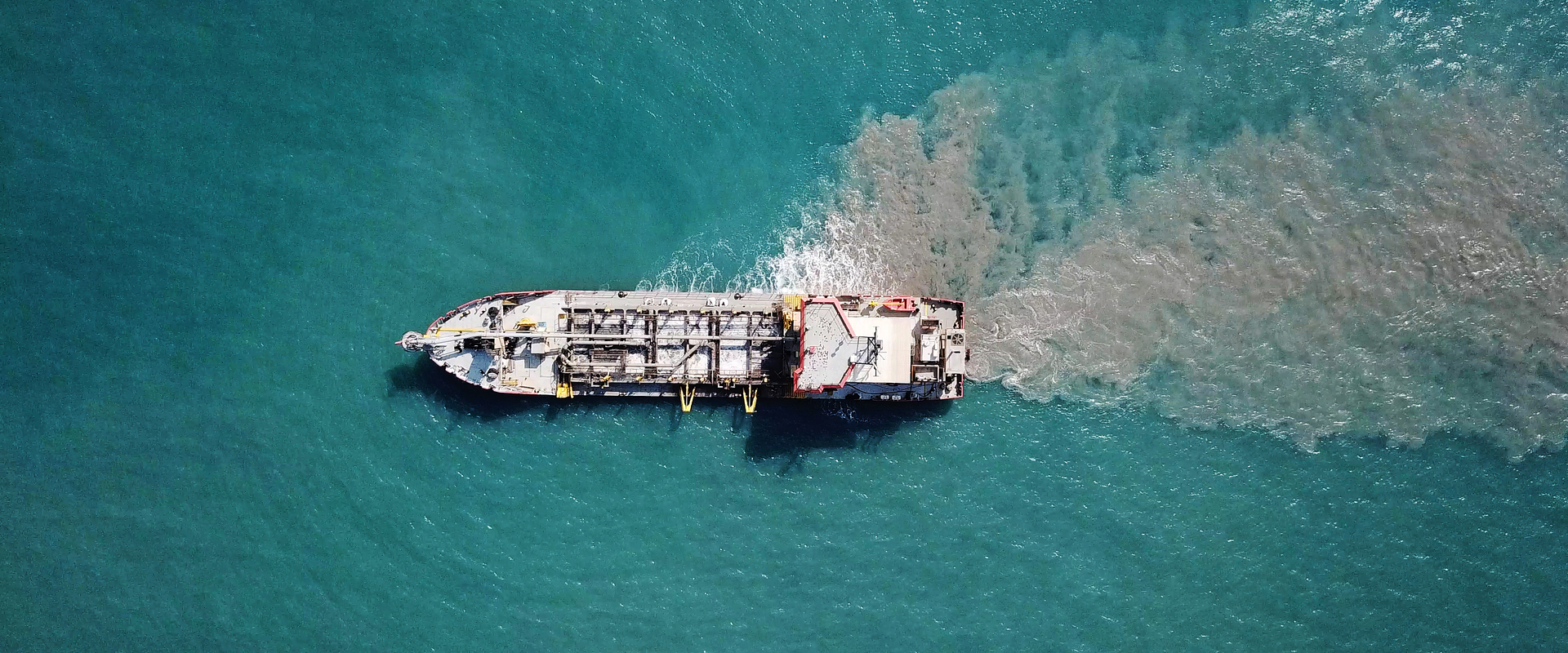
Channel Dredging Optimisation & Vessel Access | Hong Kong
Supporting confident dredging and access decisions through advanced simulation.
Supporting confident dredging and access decisions through advanced simulation.
Port authorities and terminal operators face continual pressure to accommodate larger vessels while maintaining safe and reliable access. Decisions about channel depth and dredging programmes often involve significant capital investment and long-term operational implications.
How deep and wide should a channel be dredged to safely accommodate future vessels without incurring unnecessary cost? And what incremental improvements in port operability and access arise from further incremental changes to the dredged channel profile?
Decision-makers needed confidence that dredging investments would deliver the required access, safety and operational performance while avoiding over-design and unnecessary expenditure.
Using BMT REMBRANDT, our advanced vessel simulation and navigational analysis capability, BMT assessed vessel behaviour, probabilistic vertical motion, under-keel clearance requirements and channel performance across a range of operating conditions. By modelling different scenarios, we enabled stakeholders to evaluate alternative dredging strategies, understand operational and investment trade-offs, and optimise future infrastructure requirements with confidence.
The work developed a clear evidence base for channel design and dredging decisions, helping stakeholders optimise capital investment, maintain safe vessel access and improve confidence in long-term operational planning.
EVALUATE
DECIDE
Building confidence from concept to operation for a new port development
Supporting safe growth and infrastructure planning in one of the world's busiest waterways, 2004 - 2020

We were engaged by KPA to provide site supervision, technical and management services for the delivery of the Broome Channel Optimisation project to enable port access for large shipping and cruise vessels.

SkyPier at Hong Kong International Airport provides speedy ferry service for transfer passengers. We were responsible for the ferry pontoons that act as the principal interface for passengers and baggage.